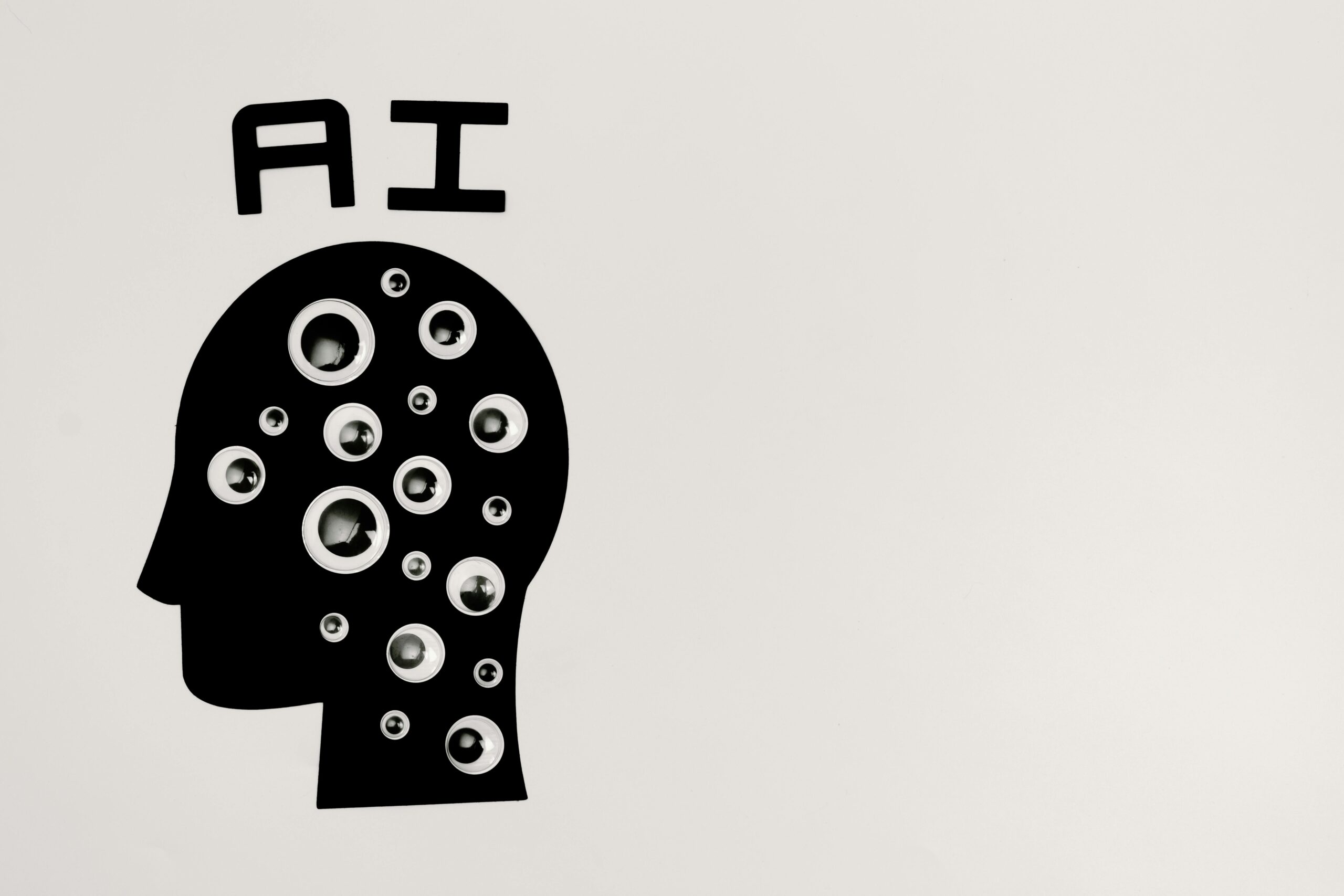
Our minds are not windows but prisms, filtering reality through invisible lenses shaped by experience, culture, and biology—often without us realizing it.

Every moment of every day, we make assumptions about what we see, hear, and experience. We believe we’re perceiving objective reality, yet our brains are constantly editing, filtering, and reconstructing the world around us. This intricate process shapes not just how we understand our environment, but fundamentally determines what we’re capable of seeing in the first place.
The barriers that constrain our perception operate largely beneath conscious awareness, creating blind spots in our understanding that can profoundly impact decision-making, relationships, and personal growth. Understanding these hidden mechanisms offers a pathway to expanded awareness and more accurate interpretations of reality.
🧠 The Architecture of Perception: How Our Brains Construct Reality
Contrary to popular belief, perception isn’t a passive recording of sensory information. Your brain actively constructs your experience of reality, using a combination of incoming sensory data and predictive models built from past experiences. This process, known as predictive processing, means you’re essentially hallucinating your reality—with sensory input merely correcting or confirming your brain’s predictions.
Neuroscientist Anil Seth describes this phenomenon as “controlled hallucination,” where the brain constantly generates its best guess about what’s happening based on prior knowledge and expectations. Only when sensory information contradicts these predictions does the brain update its model. This architecture evolved for efficiency and survival, not for philosophical accuracy.
The implications are staggering. Much of what you “see” is actually generated from within, based on expectations rather than external reality. This explains why two people can witness the same event and walk away with dramatically different accounts—they’re literally perceiving different realities shaped by their unique predictive models.
The Filtering Process: What Gets Through and What Doesn’t
Your conscious awareness can only process a tiny fraction of available sensory information. Estimates suggest that while your eyes transmit approximately 11 million bits of information per second to the brain, your conscious mind can handle only about 40-50 bits per second. The rest must be filtered, discarded, or processed unconsciously.
This massive filtering operation determines what enters your awareness and what remains hidden. The criteria for this selection process include:
- Evolutionary relevance (threats, food, potential mates)
- Personal significance based on past experiences
- Current goals and intentions
- Emotional salience and intensity
- Cultural conditioning and social expectations
What doesn’t match these criteria simply doesn’t register in conscious awareness, creating perceptual blind spots that can be remarkably extensive. You’re not seeing less of reality—you’re seeing a highly curated version optimized for your survival and success within your particular context.
🔍 Cognitive Biases: The Systematic Distortions in Our Thinking
Beyond simple filtering, our perception is subject to systematic distortions called cognitive biases. These mental shortcuts evolved to help us make quick decisions with incomplete information, but they often lead us astray in modern contexts. Understanding these biases represents the first step toward transcending their limitations.
Confirmation bias stands among the most pervasive barriers to accurate perception. Once we form a belief or hypothesis, we unconsciously seek information that confirms it while dismissing or failing to notice contradictory evidence. This creates self-reinforcing loops where initial impressions become increasingly entrenched, regardless of their accuracy.
The availability heuristic causes us to overestimate the probability of events that come easily to mind, typically because they’re recent, emotionally charged, or frequently discussed in media. This distortion explains why people fear plane crashes more than car accidents, despite statistical evidence showing the opposite risk profile.
The Dunning-Kruger Effect and the Illusion of Knowledge
Perhaps most troubling is our tendency to be unaware of our own ignorance. The Dunning-Kruger effect demonstrates that people with limited knowledge in a domain often overestimate their competence, while true experts tend toward humility about the boundaries of their understanding. This creates a perceptual barrier where the less we know, the less we realize we don’t know—limiting our motivation to expand our awareness.
This phenomenon affects perception by creating false confidence in our interpretations. When we believe we understand something completely, we stop looking for additional information or alternative perspectives. Our perception closes off precisely when it should remain most open.
🌍 Cultural Programming: The Invisible Hand Shaping What We See
Culture operates as perhaps the most powerful yet least recognized barrier to perception. From birth, we’re immersed in a cultural context that teaches us what to pay attention to, how to interpret ambiguous situations, and what constitutes “normal” or “important.” These lessons become so deeply embedded that we mistake culturally specific interpretations for universal truths.
Research in cross-cultural psychology reveals dramatic differences in basic perceptual processes. Western individuals, particularly from North America and Europe, tend toward analytic perception—focusing on objects separated from their contexts. East Asian individuals more commonly exhibit holistic perception, emphasizing relationships and contextual information.
These aren’t mere preferences but fundamental differences in what people literally see when looking at the same scene. Eye-tracking studies show that Americans focus quickly on focal objects, while Chinese participants spend more time scanning background and contextual elements. Culture shapes perception at the most basic neurological level.
Language as a Perceptual Filter
The language you speak influences what you’re capable of noticing and remembering. The linguistic relativity hypothesis, while debated in its strong forms, has found substantial support for the idea that language shapes certain aspects of cognition and perception.
Russian speakers, whose language distinguishes between light blue (goluboy) and dark blue (siniy) as separate colors, show faster discrimination between these shades than English speakers. The Himba people of Namibia, whose language has no word distinguishing green from blue but makes fine distinctions among shades we’d call “green,” show the opposite pattern—excelling at green discriminations while struggling with blue-green boundaries.
Your vocabulary literally determines what you can easily perceive and discuss. Concepts without words in your language require more cognitive effort to notice and remember, creating barriers to perception that feel entirely natural and inevitable.
💭 Emotional Barriers: How Feelings Filter Reality
Emotions function as powerful perceptual filters, directing attention toward certain aspects of experience while suppressing others. When you’re anxious, you become hypervigilant to potential threats, noticing dangers that others might miss. When you’re in love, you might overlook warning signs that would be obvious to outside observers. Emotions don’t just color your interpretation—they fundamentally alter what enters your awareness.
The phenomenon of emotional reasoning occurs when feelings are mistaken for facts. “I feel anxious, therefore there must be danger” represents a perceptual distortion where internal states are projected onto external reality. This barrier becomes particularly problematic because emotions often arise from unconscious processes, creating perceptions that feel objectively true despite lacking external validation.
Trauma and Perceptual Narrowing
Traumatic experiences create lasting alterations in perceptual systems, particularly through heightened threat detection. Post-traumatic stress involves a recalibration of perceptual filters, where the brain becomes oversensitive to potential dangers resembling the original trauma. This protective mechanism, while adaptive in genuinely dangerous environments, can create perceptual distortions in safe contexts.
Individuals with trauma histories often perceive threats that others don’t see, not because they’re irrational but because their perceptual systems are operating with different parameters. Understanding this helps explain why rational arguments often fail to change threat perceptions—the perception originates at a level beneath conscious reasoning.
🔓 Breaking Through: Strategies for Expanding Perceptual Awareness
Recognizing the barriers that shape perception represents the essential first step toward transcending them. While we can never achieve perfectly objective perception—our biology and context necessarily constrain awareness—we can significantly expand the range and accuracy of what we perceive.
Mindfulness practices offer one of the most validated approaches for enhancing perceptual awareness. By training attention to observe experience without immediate judgment or categorization, mindfulness helps reveal the gap between raw sensory information and our interpretive overlay. Regular practitioners report noticing details in their environment and internal experience that previously went undetected.
Actively Seeking Disconfirming Evidence
Counteracting confirmation bias requires deliberate effort to seek information that challenges existing beliefs. This practice feels unnatural and uncomfortable—precisely because it works against deeply ingrained cognitive tendencies. Effective strategies include:
- Regularly engaging with perspectives that contradict your own
- Asking “What would change my mind about this?” before forming conclusions
- Playing devil’s advocate with your own positions
- Creating decision frameworks that require considering alternative interpretations
- Building diverse social networks that expose you to different worldviews
The goal isn’t to become paralyzed by relativism but to hold beliefs more lightly, maintaining openness to evidence that might refine or overturn current understanding. This intellectual humility expands perceptual possibilities by preventing premature closure.
🎯 The Practice of Perspective-Taking
Deliberately adopting different perspectives serves as powerful training for perceptual flexibility. When facing a situation, systematically consider how it might appear from various viewpoints—not just different people, but different time frames, different levels of analysis, and different value systems.
This practice reveals how much of what seems “obviously true” depends on the particular vantage point you’re occupying. A business decision that seems clearly correct from a quarterly profit perspective might appear disastrous from a ten-year sustainability view. A personal choice that feels selfish from one angle might be appropriately self-caring from another.
Perspective-taking exercises strengthen the mental flexibility required to recognize that your current perception is one possibility among many, not an objective representation of reality. This recognition opens space for additional information to enter awareness.
Cross-Cultural Exposure and Learning
Immersing yourself in different cultural contexts—whether through travel, relationships, language learning, or consuming media from diverse sources—helps reveal the culturally specific nature of your perceptual filters. When you encounter people who literally perceive situations differently, it becomes impossible to maintain the illusion that your way of seeing is simply “how things are.”
This exposure needs to go beyond superficial tourism to genuine engagement with different meaning-making systems. Learning a new language, studying a different philosophical tradition, or building deep friendships across cultural boundaries all serve to expand perceptual possibilities by adding new conceptual frameworks to your repertoire.
🌟 The Neuroscience of Perceptual Change
Understanding that perception involves physical brain structures offers both challenges and opportunities. The challenge is that changing perception requires rewiring neural networks—a process requiring time and repetition. The opportunity is that neuroplasticity ensures such change remains possible throughout life.
Every time you consciously notice something previously filtered from awareness, you strengthen the neural pathways associated with that perception. Repeated practice gradually shifts default settings, making previously effortful perceptions automatic. This is why skills that initially require intense concentration eventually become second nature—the brain literally reconstructs itself around new perceptual patterns.
Deliberate practice in perceptual awareness accelerates this neural remodeling. Rather than waiting for random experiences to gradually reshape your perceptual systems, you can actively target specific blind spots and systematically work to expand awareness in those domains.
✨ Living With Expanded Awareness: The Ongoing Journey
Expanding perceptual awareness isn’t a destination but an ongoing practice. Even with dedicated effort, you’ll continue to have blind spots—the goal is to have different and fewer ones, while maintaining humility about those that remain unrecognized.
The most profound shift comes not from achieving perfect perception but from developing comfort with uncertainty. When you recognize that your perception is necessarily limited and potentially distorted, you can hold your interpretations more lightly. This doesn’t lead to paralysis but to a more flexible, adaptive way of engaging with reality.
People who successfully expand their perceptual awareness report richer experiences, better decision-making, more satisfying relationships, and greater creative capacity. They don’t see “more” in a simple quantitative sense but see more accurately and with greater nuance. The world becomes simultaneously more complex and more comprehensible.
The Responsibility of Enhanced Perception
As your perception expands, you may notice things others don’t see—patterns, connections, implications that remain hidden to those with more constrained awareness. This brings responsibility to share insights compassionately, recognizing that what’s now obvious to you may be genuinely invisible to others not because they’re foolish but because they’re operating with different perceptual filters.
The journey of expanding perception ultimately leads to greater empathy and connection. When you recognize that everyone is navigating reality through their own set of filters and biases, you can engage with different perspectives with curiosity rather than judgment. You realize that the goal isn’t to prove your perception “right” but to integrate multiple perspectives into a richer, more complete understanding.
Your mind will always construct reality rather than simply recording it. The barriers that shape perception can never be completely eliminated—they’re features of consciousness, not bugs to be fixed. But by understanding these barriers and actively working to expand awareness, you can dramatically increase both the range and accuracy of what you perceive. The hidden becomes visible, the overlooked gains attention, and reality reveals itself as far more complex, nuanced, and fascinating than previously imagined. The work of unlocking your mind is the work of a lifetime, yielding rewards that compound with each new layer of awareness gained. 🔑