Precision, speed, and control define modern productivity. Yet many professionals still struggle with the hidden costs of manual operations that quietly erode efficiency and quality every single day.

🎯 The Hidden Cost of Manual Control in Modern Workflows
Manual control has long been the foundation of skilled work across industries. From manufacturing to digital design, human hands and eyes have guided countless processes to completion. However, as standards for precision rise and competition intensifies, the limitations of purely manual approaches become increasingly apparent.
The challenge isn’t simply about speed. Manual operations introduce variability that compounds over time, creating inconsistencies that impact final product quality. When operators rely solely on physical coordination and visual judgment, fatigue, distraction, and the inherent limits of human perception all contribute to deviation from optimal performance.
Consider the machinist adjusting tool paths by hand, the designer manually aligning elements pixel by pixel, or the operator controlling equipment through direct physical manipulation. Each action carries a margin of error that, while individually small, accumulates to create significant quality variations.
Understanding the Precision Gap
The gap between what manual control can achieve and what modern applications demand grows wider each year. Industries now operate with tolerances measured in micrometers, response times in milliseconds, and quality standards that allow virtually zero defects.
Human physiology imposes fundamental limits on what manual control can achieve. The steadiest hand still experiences micro-tremors. The sharpest eye still faces resolution limits. Reaction times, no matter how practiced, cannot match electronic response speeds. These biological constraints aren’t weaknesses to be ashamed of—they’re simply realities to be acknowledged and addressed.
Quantifying Manual Limitations
Research consistently demonstrates specific boundaries for manual operations. Average human reaction time ranges from 200-300 milliseconds under ideal conditions, extending significantly when fatigue or complexity enters the equation. Positional accuracy for manual placement typically falls within a range of 0.5-2 millimeters for skilled operators, far too coarse for many modern applications.
Repeatability suffers even more dramatically. While an operator might achieve excellent precision on a single attempt when fully focused, maintaining that performance across hundreds or thousands of repetitions proves nearly impossible. Variation increases as the day progresses, as complexity rises, and as attention naturally drifts.
🚀 Edge Control Technologies: Bridging the Gap
Edge control represents the convergence of sensing, processing, and actuation at the point of action. Rather than replacing human judgment, these systems augment manual operations with precision that surpasses biological limits while maintaining the adaptability and decision-making that humans excel at.
The “edge” in edge control refers to processing and decision-making occurring locally, at the operational point, rather than relying on distant centralized systems. This architecture delivers the responsiveness necessary for real-time precision control while maintaining the flexibility to adapt to changing conditions.
Core Components of Edge Control Systems
Modern edge control integrates several key technologies working in concert. High-resolution sensors capture position, force, velocity, and environmental data with precision far exceeding human perception. Local processing units analyze this data stream in real-time, detecting deviations and calculating corrections within microseconds.
Actuators then implement these corrections with accuracy and speed impossible through manual adjustment. Feedback loops close at rates measuring hundreds or thousands of cycles per second, maintaining parameters within tightly controlled bands regardless of external disturbances.
The result is performance that combines human-level adaptability with machine-level precision—truly the best of both worlds when implemented thoughtfully.
Practical Applications Across Industries
Edge control technologies manifest differently across sectors, but the underlying principle remains constant: augmenting human capability with precision systems that eliminate manual control limitations.
Manufacturing and Fabrication
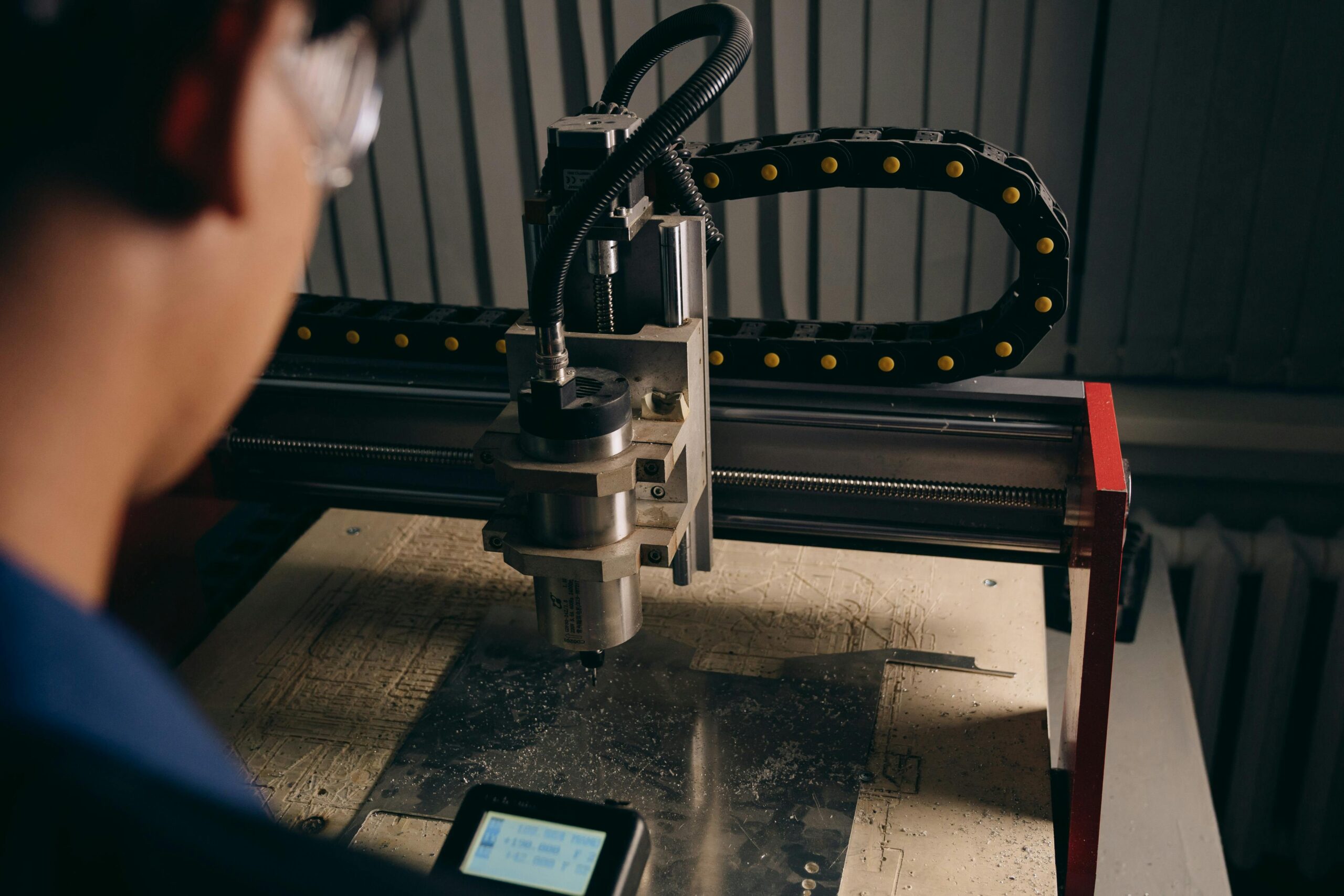
In manufacturing environments, edge control systems manage everything from CNC machining to robotic assembly. Rather than operators manually adjusting tool positions, automated systems maintain tolerances within micrometers while operators focus on process optimization, quality verification, and problem-solving.
Modern CNC controllers exemplify edge computing principles. They process G-code instructions locally, adjusting feed rates, tool paths, and spindle speeds in real-time based on sensor feedback about cutting forces, vibration, and material properties. The operator sets parameters and monitors overall process health while the edge system handles the microsecond-by-microsecond execution that defines final part quality.
Photography and Visual Media
Camera stabilization technology demonstrates edge control principles applied to creative work. Gyroscopic sensors detect movement at rates measuring hundreds of times per second, while processing units calculate compensating adjustments that actuators implement through lens element repositioning or sensor shifting.
The photographer maintains complete creative control over composition, timing, and settings while the stabilization system eliminates hand tremor and unwanted movement. Manual control focuses on the creative decisions humans excel at, while automated systems handle the precision stabilization that would be impossible through manual technique alone.
Medical Procedures
Surgical robotics pushes edge control into life-critical applications. Surgeons control instrument positioning through intuitive interfaces while robotic systems eliminate hand tremor, scale movements for extreme precision, and maintain steady positioning indefinitely without fatigue.
These systems don’t replace surgical skill—they amplify it. The surgeon’s knowledge, judgment, and decision-making remain central while the robot eliminates the physical limitations that would otherwise constrain precision. Incisions can be smaller, placement more accurate, and outcomes more consistent.
⚡ Implementation Strategies for Maximum Impact
Successfully implementing edge control requires more than simply purchasing technology. Organizations must approach integration strategically, considering workflow, training, and cultural factors alongside technical specifications.
Assessment and Planning
Begin by identifying processes where manual control limitations most significantly impact outcomes. Look for operations characterized by high precision requirements, repetitive actions, or quality variation linked to operator fatigue. These represent prime opportunities for edge control implementation.
Quantify current performance baselines. Measure accuracy, repeatability, throughput, and defect rates under existing manual control conditions. These metrics establish the foundation for evaluating improvement after implementation and calculating return on investment.
Technology Selection Criteria
Not all edge control solutions suit all applications. Evaluate options based on several key factors:
- Precision requirements: Match sensor resolution and actuator accuracy to your actual needs—excess precision adds cost without benefit
- Response time: Consider process dynamics and how quickly corrections must be implemented
- Integration complexity: Assess compatibility with existing systems and workflow disruption during implementation
- Operator interface: Ensure controls remain intuitive and don’t create new barriers to productivity
- Maintenance demands: Factor ongoing calibration, servicing, and potential downtime into total cost calculations
Training and Cultural Integration
Technology adoption fails more often from human factors than technical issues. Operators accustomed to manual control may initially resist systems that change their role, even when those systems demonstrably improve outcomes.
Frame edge control as augmentation rather than replacement. Emphasize how automation handles tedious precision work while freeing operators to focus on higher-level tasks requiring judgment, creativity, and problem-solving. Involve operators early in selection and implementation processes, incorporating their feedback and addressing concerns proactively.
Provide comprehensive training that builds genuine understanding, not just rote procedure memorization. Operators who understand how edge control systems function become better at optimizing their use, troubleshooting issues, and identifying opportunities for further improvement.
📊 Measuring Success and Continuous Improvement
Edge control implementation shouldn’t end at installation. Establish metrics and monitoring systems that track performance improvements and identify optimization opportunities.
Key Performance Indicators
Track metrics that directly reflect the limitations you aimed to overcome through edge control implementation. Precision and accuracy measurements reveal whether systems deliver the consistency manual control couldn’t achieve. Throughput data shows whether automation enables faster cycle times. Quality metrics demonstrate impact on defect rates and rework requirements.
Compare post-implementation performance not just against baseline manual operation but against theoretical optimal performance. This gap analysis highlights remaining opportunities for tuning and optimization.
Iterative Optimization
Edge control systems typically allow parameter adjustment and tuning. Work systematically through variables that affect performance, testing changes and measuring results. Small improvements across multiple parameters compound into significant overall gains.
Document changes and their impacts meticulously. This knowledge base becomes increasingly valuable as you expand edge control implementation across additional processes and train new operators.
🔧 Overcoming Common Implementation Challenges
Even well-planned implementations encounter obstacles. Anticipating common challenges enables proactive solutions that keep projects on track.
Integration Complexity
Legacy equipment often lacks the interfaces necessary for modern control systems. Retrofitting sensors and actuators to existing machinery requires creative engineering and sometimes custom fabrication. Plan for this complexity during project scoping, allocating appropriate time and budget for integration work.
Where direct integration proves impractical, consider parallel implementation where edge control systems work alongside existing equipment rather than directly controlling it. This approach often enables faster deployment with lower risk.
Calibration and Maintenance
Precision systems require regular calibration to maintain accuracy. Establish calibration schedules based on manufacturer recommendations and usage patterns. Treat calibration as preventive maintenance rather than reactive troubleshooting—catching drift early prevents quality issues and costly rework.
Train internal staff to handle routine calibration and basic troubleshooting. While specialized service will sometimes be necessary, building internal competency reduces downtime and operating costs over the system lifecycle.
The Future of Human-Machine Collaboration
Edge control technologies continue advancing rapidly. Artificial intelligence and machine learning now enable systems that don’t just execute programmed instructions but adapt based on experience, optimizing parameters automatically as conditions change.
Predictive maintenance capabilities detect subtle performance changes that signal impending failures, enabling proactive intervention before problems impact production. Digital twins create virtual replicas of physical processes, allowing testing and optimization in simulation before implementing changes on actual equipment.
The trajectory points clearly toward tighter integration between human expertise and machine precision. Rather than choosing between manual craftsmanship and automated production, future workflows will seamlessly blend both, leveraging each for what it does best.
💡 Strategic Competitive Advantages
Organizations that successfully master edge control gain advantages that extend far beyond immediate productivity improvements. Superior precision enables tighter specifications, opening markets and applications unavailable to competitors constrained by manual control limitations.
Consistency and repeatability build reputation and customer confidence. When every unit meets specifications precisely, warranty costs decrease and customer satisfaction increases. This reliability creates differentiation in crowded markets where competitors struggle with quality variation.
Operator satisfaction often improves as well. While initial resistance is common, most operators ultimately appreciate systems that eliminate tedious precision work and allow them to focus on more engaging, higher-value activities. Reduced physical strain from repetitive manual operations decreases fatigue and injury risk.
Building Your Implementation Roadmap
Successful edge control adoption follows a logical progression. Start with pilot implementations in processes where success potential is highest—applications with clear manual control limitations, quantifiable performance gaps, and manageable technical complexity.
Document results thoroughly, capturing both quantitative metrics and qualitative operator feedback. Use successful pilots to build organizational buy-in and refine your implementation methodology before scaling to additional processes.
Develop internal expertise progressively. As your team gains experience with edge control technologies, they’ll identify opportunities and solutions that weren’t apparent initially. This growing competency becomes a strategic asset that compounds over time.
Budget realistically for the complete implementation, including equipment, integration, training, and the learning curve during initial deployment. Underfunding implementations often leads to compromises that undermine results and create negative impressions that hinder future projects.
🎓 Moving Beyond Manual Limitations
The transition from manual control to edge-augmented operations represents more than technological upgrade—it’s a fundamental shift in how work gets done. Organizations that navigate this transition successfully don’t just adopt new tools; they rethink processes, workflows, and roles to fully leverage the capabilities that precision automation enables.
Manual skill and expertise remain valuable, but their application shifts. Instead of operators dedicating attention to the mechanics of precision control, they focus on optimization, problem-solving, and quality assurance. The cognitive aspects of work become more prominent while the purely physical demands decrease.
This evolution requires intentional change management. Clear communication about why edge control matters, how it benefits both organization and individuals, and what the implementation process involves helps build the engagement necessary for success.
The precision, performance, and productivity gains that edge control delivers create tangible competitive advantages in virtually every industry. Manual control served admirably for generations, but modern demands have simply outpaced what human physiology alone can achieve. The organizations that recognize this reality and act decisively to augment human capability with precision automation will define excellence in their fields for years to come.
Whether you’re manufacturing components, creating digital content, performing medical procedures, or pursuing any activity where precision matters, the path forward involves thoughtful integration of edge control technologies that eliminate manual limitations while preserving and amplifying human expertise. The journey requires investment, planning, and persistence, but the destination—operations characterized by unprecedented precision, consistency, and productivity—makes the effort worthwhile.